Laminate vs Solid Wood Desktop
Quick answer
A laminate or MDF desktop is lighter, cheaper, and does not move with humidity, making it the safer default for a standing desk frame where lift capacity matters. A solid hardwood desktop, which can weigh up to 95 lb at 72 x 30 in, looks and feels better but eats directly into a standing desk's rated lift capacity and can expand or contract slightly with seasonal humidity changes.
Researched from published material weights and standing desk lift capacity specifications, plus verified owner reviews, rather than in-person testing.
The options
- Laminate or MDF desktop
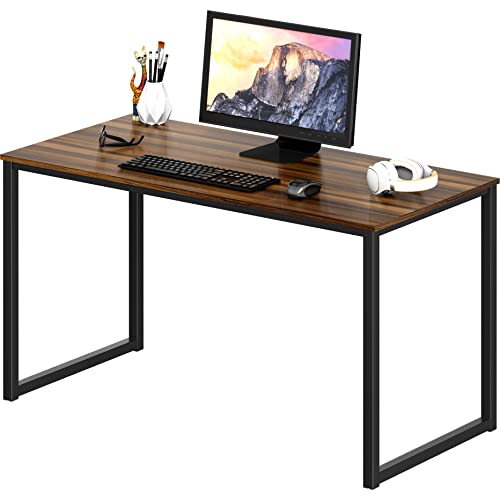
SHW Mission 40-Inch Home Office Computer Desk, Walnut
The SHW Mission 40-Inch Home Office Computer Desk in Walnut finish, a lighter laminate and MDF construction desk, at $69.97.
$69.97 Check pricePrices change often - Solid wood desktop
The Howizz 60 x 30 in Solid Wood Table Top in Dark Walnut stained acacia, a heavier hardwood desktop sold separately for pairing with a base, at $249.00.
$249.00 Check pricePrices change often

Best for: Standing desk frames where every pound of desktop weight matters, and humid or variable climates.
Avoid if: You specifically want the look, feel, and long-term character of real hardwood grain.
Best for: Stationary desks, dual motor frames with capacity to spare, and buyers who want a genuine hardwood surface.
Avoid if: You are pairing it with a single motor standing desk frame or live somewhere with large seasonal humidity swings.
| Specification | Laminate/MDF | Solid wood |
|---|---|---|
| Typical weight at 72 x 30 in | Significantly lighter, often under 40 lb | Up to 95 lb |
| Effect on standing desk lift capacity | Minimal reduction | Can consume a large share of a single motor frame's rated capacity |
| Movement with humidity | Stable, does not expand or contract | Can expand or contract seasonally |
| Surface appearance | Printed or veneer wood-look finish | Genuine wood grain and character |
| Typical price range | Lower | Higher |
| Price at review | $69.97 (SHW Mission 40 in desk) | $249.00 (Howizz 60x30 solid wood top) |
How much of your standing desk's capacity a heavy top can use
Every standing desk frame's published lift capacity, whether a single motor frame's 150 to 220 lb class or a dual motor frame's 250 to 355 lb class, excludes the tabletop itself. A laminate or MDF desktop typically weighs well under 40 lb even at a generous 60 x 30 in size, leaving the large majority of the frame's rated capacity available for monitors, a monitor arm, a dock, and everything else that sits on the surface.
A solid hardwood desktop at 72 x 30 in can weigh up to 95 lb, which on a single motor frame rated at 150 to 220 lb can consume nearly half of the available capacity before a single monitor is placed on the desk. This is the single most important reason to check desktop material against frame class before buying either piece separately, since pairing a heavy hardwood top with a budget single motor frame is the most common way buyers end up with far less usable capacity than the frame's headline number suggests.
Why solid wood moves and laminate does not
Solid hardwood is a natural material that continues to respond to its environment after being cut and finished, expanding slightly when humidity rises and contracting when it drops. This movement is usually small enough not to cause structural problems on a well-finished desktop, but it can show up as slight warping at the edges, a seam that opens fractionally at a glue joint, or a top that no longer sits perfectly flat against a frame it was originally fitted to, especially in climates with large seasonal humidity swings.
Laminate and MDF desktops are engineered specifically to avoid this problem. The core material is manufactured under controlled conditions and then sealed with a laminate surface that resists moisture absorption, so the desktop's dimensions stay effectively constant regardless of the season. This stability is a genuine practical advantage in variable climates, not just a cost-saving feature, and it is one of the main reasons laminate remains the default choice for standing desks despite solid wood's appearance advantage.
Where bamboo fits between the two
Bamboo is technically a grass rather than a hardwood, but it is milled and laminated into desktop planks that behave more like an engineered wood product than a single solid slab. This gives bamboo a lighter typical weight than genuine hardwood while still offering visible natural grain and a warmer look than a printed laminate surface, which is why several standing desk manufacturers offer a bamboo top as their mid-tier option between a basic laminate top and a premium solid wood one.
Bamboo is not entirely immune to humidity movement the way laminate is, since it retains more of a natural wood-like structure than an engineered laminate core, but it generally moves less than solid hardwood due to its manufacturing process. For a buyer who wants some of solid wood's visual warmth without the full weight penalty against a standing desk's lift capacity, bamboo is worth checking as a middle option before defaulting to either extreme.
Matching the desktop to the frame you already own
If you already own a standing desk frame, check its published lift capacity and motor class before shopping for a replacement desktop, rather than choosing the desktop first based on looks alone. A single motor frame in the 150 to 220 lb class has much less room to spare for a heavy desktop than a dual motor frame in the 250 to 355 lb class, and pairing the wrong desktop with the wrong frame is the most common way buyers end up disappointed with a standing desk's usable capacity after the fact.
If you are buying both pieces new, it is often simpler to buy a desk sold as a complete kit, frame and top together, since the manufacturer has already matched the desktop weight to the frame's rated capacity. Buying a premium solid wood top separately from a frame gives more control over the final look, but it puts the compatibility check entirely on the buyer, and skipping that check is the single most avoidable mistake in this comparison.
Buying the desktop and frame separately
Some of the desktops in this comparison are sold on their own, without a frame, meant to be paired with whatever base you already own or are buying separately. This is common with premium solid wood tops, since manufacturers let buyers choose their own frame rather than bundling a specific one. When buying this way, always check the desktop's weight against your chosen frame's rated lift capacity before finalizing the purchase, since the two products are priced and shipped independently and neither listing will automatically flag an incompatibility for you.
Standing desks with laminate tops
Shown across the range this category actually spans, from $99.98 to $679.99, rather than the cheapest few.
- FEZIBO
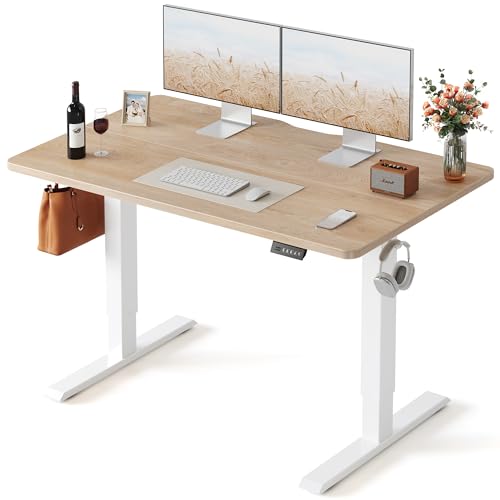
FEZIBO Standing Desk 48 × 24 Inch Electric Height Adjustable, Maple
$99.98 Check pricePrices change often - VIVO
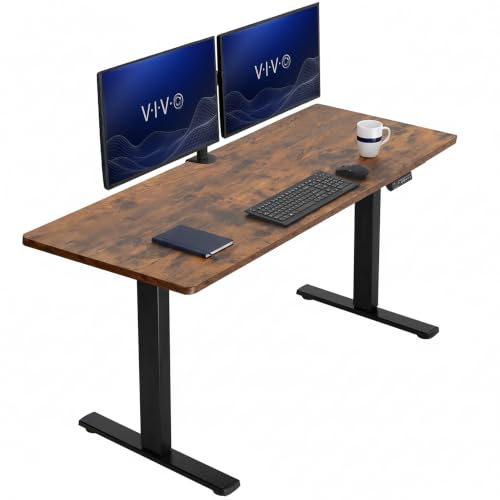
VIVO Rustic Vintage Brown 60 x 24 in Standing Desk, DESK-KIT-1B6N
$219.99 Check pricePrices change often




Solid wood desktops
Shown across the range this category actually spans, from $249.00 to $269.00, rather than the cheapest few.


Get the desk setup checklist
One page: the measurements to take, the order to set them in, and the numbers to check against. Free, no spam.
The mailing list opens shortly. Every measurement it covers is already on this site, in the calculators and the fit tables, at no cost and with no address required.
Questions people ask
Will a solid wood desktop overload my standing desk?
It depends on the frame's rated capacity and the top's exact weight. A solid hardwood top at 72 x 30 in can weigh up to 95 lb, which on a single motor frame in the 150 to 220 lb class leaves substantially less capacity for monitors and gear than the same frame with a lighter laminate top. Check both numbers before pairing a heavy top with a budget frame.
Does a laminate desktop look cheap compared with solid wood?
Modern laminate and veneer finishes have improved significantly and can closely resemble real wood grain in photos and from a distance, but they do not fully replicate the texture, weight, and long-term character of genuine hardwood up close. Whether that matters is a matter of personal preference and budget rather than an objective quality gap.
Why does a solid wood desktop expand and contract?
Wood is a natural, porous material that absorbs and releases moisture from the surrounding air, causing it to expand slightly in humid conditions and contract in dry conditions. This is a normal property of solid wood, not a manufacturing defect, though large or rapid humidity swings can occasionally cause visible effects like minor warping or an opened glue seam over years of use.
Is bamboo a good middle ground between laminate and solid wood?
Yes, for buyers who want more visual warmth than laminate but less weight than solid hardwood. Bamboo desktops are generally lighter than solid hardwood equivalents while offering more natural material character than a laminate or MDF surface, making them a reasonable compromise when both desktop weight and standing desk lift capacity matter alongside appearance.
Can I put a heavy solid wood top on a dual motor standing desk?
Generally yes, since a dual motor frame's higher rated capacity, commonly 250 to 355 lb, has more room to absorb a heavy top's weight than a single motor frame does. Still subtract the top's actual weight from the frame's rating to confirm the remaining capacity comfortably covers your monitors and other desk equipment.
Do I need to refinish a solid wood desktop over time?
Most solid wood desktops ship pre-finished with a sealant that protects against moisture and daily wear, and this finish typically lasts for years under normal use. Heavy use, spills, or long-term sun exposure can eventually dull or damage the finish, at which point refinishing or resealing restores the surface, an option a laminate desktop does not offer once its surface is damaged.