Viewing distance for a 16 in 1080p monitor
Quick answer
Sit about 25 in (63 cm) from a 16 in 1080p monitor. At 137.7 ppi the pixel structure disappears at that distance, and the screen then fills 31.2 degrees of your field of view, which is inside the 30 to 55 degree band that suits desk work.
The geometry is exact trigonometry. The 60 pixels per degree threshold and the field of view targets are conventions, and personal eyesight moves both.
| Property | Value | What it means |
|---|---|---|
| Resolution | 1920 x 1080 | 1080p, 16:9 |
| Pixel density | 137.7 ppi | High density. Text is smooth and scaling is usually needed. |
| Screen width | 13.9 in (35 cm) | Drives the desk width you need |
| Screen height | 7.8 in (20 cm) | Drives how low the panel has to sit |
| Comfort distance | 25 in (63 cm) | Where the pixel grid stops being resolvable |
| Field of view at that distance | 31.2 deg | Target is 30 to 55 degrees |
| Distance | Field of view | Pixel grid | Verdict |
|---|---|---|---|
| 20 in | 38.4 deg | Visible | Comfortable. |
| 24 in | 32.4 deg | Visible | Comfortable. |
| 28 in | 28 deg | Not resolvable | Further than needed, text gets small. |
| 32 in | 24.6 deg | Not resolvable | Further than needed, text gets small. |
| 36 in | 21.9 deg | Not resolvable | Further than needed, text gets small. |
| 40 in | 19.8 deg | Not resolvable | Further than needed, text gets small. |
Panels and arms around this size
Shown across the range this category actually spans, from $25.49 to $309.99, rather than the cheapest few.
- WALI
WALI Adjustable Single Monitor Arm for 13-34 inch Screens, up to 26.4 lbs
$25.49 Check pricePrices change often - Acer
Acer 23.8in FHD 1920x1080 IPS 120Hz Office Monitor KB242Y G0bi
$79.99 Check pricePrices change often


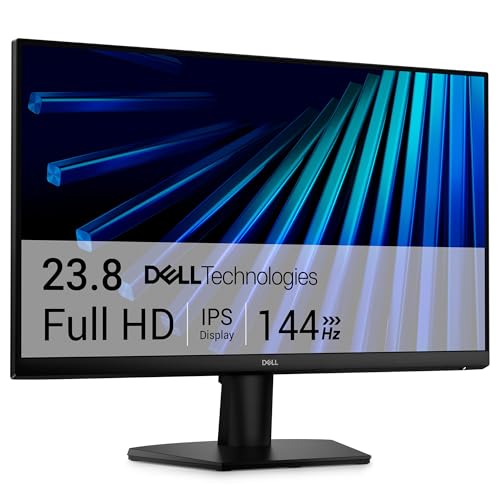


Why higher resolution means sitting closer, not further
Pixel density decides the minimum distance and nothing else does. A 16 in panel at 1080p works out to 137.7 pixels per inch, and the eye stops resolving individual pixels at about 60 pixels per degree, which puts the threshold at 25 in. Below that you begin to see the structure of the image; above it you are simply making everything smaller than it needs to be.
This runs against the common assumption that a bigger or sharper screen should be pushed further away. The opposite is true. Higher density lets you come closer, and coming closer is what makes a large screen useful, because the whole point of the extra area is that it fills more of your field of view. A 4K panel kept at the distance a 1080p panel needed is a 4K panel doing a 1080p job.
What this means for the desk
At 25 in of viewing distance the desk has to be deep enough to put the panel there. On a factory stand the base occupies about 9 in of depth behind the screen, so the desk needs roughly 20 in of depth to get there without the screen hanging off the back edge.
A clamp arm needs about 3 in instead and cantilevers the panel forward over the desk, which is why arms are the standard fix for a desk that is not deep enough. On a 16 in panel the difference is worth about 6 in of usable depth, and it also lets you push the screen back when you want the space and pull it forward when you do not.
Questions people ask
How far should I sit from a 16 inch 1080p monitor?
About 25 in (63 cm). At 137.7 ppi that is where the pixel grid stops being resolvable, and the screen then occupies 31.2 degrees of your view, which sits inside the comfortable band for desk work. Closer than about 20 in is not recommended for sustained work whatever the arithmetic says.
Is this panel sharp enough at desk distance?
At 137.7 ppi, yes comfortably. This is a high density panel and text is smooth at any normal desk distance, though you will probably want display scaling so interface elements are not tiny.
What desk depth does this monitor need?
Roughly 20 in on the factory stand, because the base takes about 9 in behind the panel. A clamp arm needs about 3 in and hangs the screen out over the desk, which recovers several inches on a shallow desk.
Does sitting further away reduce eye strain?
Beyond the point where the pixel grid disappears, extra distance mostly just makes text smaller, and squinting at small text is its own strain. What helps more is matching screen brightness to the room, keeping the top of the panel at or below eye height, and looking at something far away periodically so the focusing muscles relax. This is general information rather than medical advice.