Ergonomics Standards Explained
Quick answer
ANSI/HFES 100 specifies adjustment ranges that accommodate a percentile spread of adult bodies, not one correct desk or chair dimension, and ANSI/BIFMA G1 translates those body dimensions into the furniture ranges manufacturers design to. Separately, ANSI/BIFMA X5.1 tests general purpose office chairs, X5.11 tests large occupant chairs, and X5.5 tests desks and tables, and passing one of these test standards does not mean a product has passed another.
Every standard referenced by name in this guide is a real published ANSI or ANSI/BIFMA document; this guide summarizes what each one covers rather than reproducing its full text or claiming certification on any specific product.
A surprising amount of office furniture marketing cites "ergonomic standards" without saying which one, and the standards that actually exist do not work the way that marketing implies. None of them hand you a single correct desk height or a guaranteed weight capacity that applies everywhere the phrase is used. This guide separates the two families that matter for a home office: ANSI/HFES 100 and ANSI/BIFMA G1, which describe adjustment ranges for human bodies, and the ANSI/BIFMA X5 series, which are physical test standards for specific furniture categories.
What is ANSI/HFES 100 and what does it actually specify?
ANSI/HFES 100, Human Factors Engineering of Computer Workstations, is the standard most often invoked, correctly or not, when a product claims to be "ergonomically correct." Its central idea, and the single most important concept on this entire site, is that it specifies adjustment RANGES that accommodate a percentile range of users, not single correct dimensions for any one person.
In practice, this means the standard tells a furniture designer that a chair or desk needs to adjust across a range wide enough to fit, for example, a 5th percentile female and a 95th percentile male, rather than telling either of them their personal correct number. Your job as a buyer is to find where in that published range your own body actually lands, which is the entire premise behind the ratio-based fitting approach used throughout this site.
How is ANSI/BIFMA G1 different from ANSI/HFES 100?
ANSI/BIFMA G1 is an ergonomics guideline, developed specifically for furniture manufacturers, that translates human body dimension data into the specific furniture adjustment ranges a chair or desk should be built to cover. Where ANSI/HFES 100 is written from the perspective of workstation design broadly, ANSI/BIFMA G1 is the furniture industry's own guideline for turning that same body of human factors data into buildable product specifications.
The two are complementary rather than competing: a manufacturer designing a chair to ANSI/BIFMA G1 is implementing the same underlying idea that ANSI/HFES 100 describes, adjustment range to fit a population, not a single fixed dimension.
| Standard | Focus | Written for |
|---|---|---|
| ANSI/HFES 100 | Adjustment ranges for computer workstations broadly | Workstation and furniture designers |
| ANSI/BIFMA G1 | Body dimensions translated into furniture adjustment ranges | Office furniture manufacturers |
Chairs by weight class and test standard
Shown across the range this category actually spans, from $99.99 to $349.99, rather than the cheapest few.
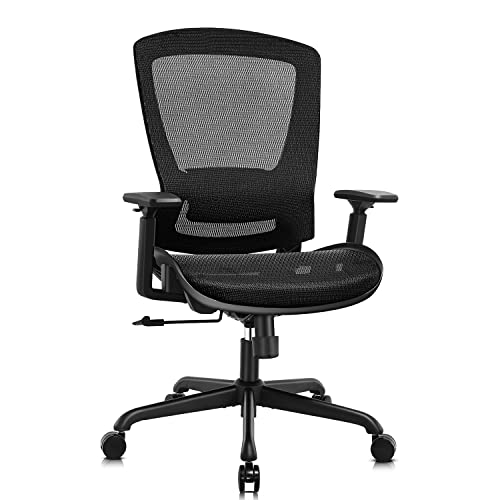
- ErgoSift
ErgoSift M1 Ergonomic Office Chair with 3.1-Inch Adjustable Seat Depth
$99.99 Check pricePrices change often - HUANUO
HUANUO Ergonomic Office Chair with 6D Armrests and Adjustable Seat Depth
$134.99 Check pricePrices change often



What is the difference between the ergonomics guidelines and the BIFMA test standards?
ANSI/HFES 100 and ANSI/BIFMA G1 are guidance documents about human dimensions and adjustment ranges. The ANSI/BIFMA X5 series is a different family entirely: physical test standards that put actual furniture through static load, drop, durability and stability testing, with no reference to what range of human bodies the product needs to accommodate. A product can pass an X5 test standard and still be a poor ergonomic fit for a given user, and a chair with excellent adjustment range per G1 guidance still has to separately pass the relevant X5 durability test to be considered structurally sound for sale.
What does ANSI/BIFMA X5.1 actually test?
ANSI/BIFMA X5.1 is the general purpose office chair test standard, covering static load testing (how much weight the seat and back can bear without failure), drop testing (simulating someone sitting down forcefully), durability cycling (repeated use over a simulated lifespan), and tip stability (resistance to tipping over under off-center load). A chair listed as meeting this standard has been tested against these specific criteria for a general adult population.
Desks built to the X5.5 category
Shown across the range this category actually spans, from $79.99 to $679.99, rather than the cheapest few.
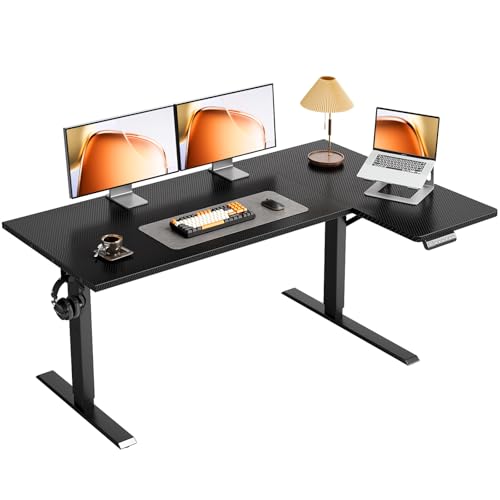
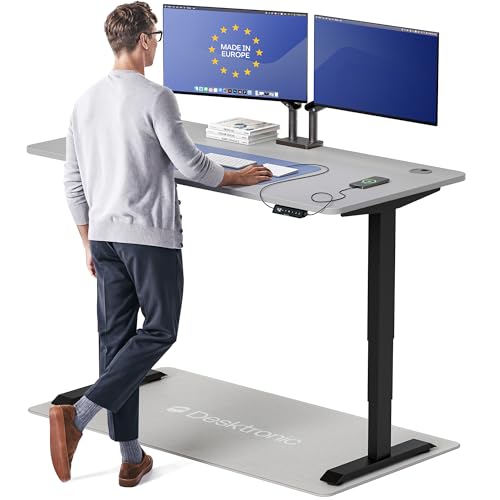
- Furmax
Furmax 55 Inches Electric Height Adjustable Standing Desk Home Office Desk
$109.99 Check pricePrices change often - OffiGo
OffiGo 55" Reversible L Shaped Electric Standing Desk, Carbon Fiber Black
$149.99 Check pricePrices change often - VIVO
VIVO Reclaimed Wood 60 x 24 in Standing Desk, DESK-KIT-1B6P
$219.99 Check pricePrices change often




Why is ANSI/BIFMA X5.11 a completely different standard from X5.1?
ANSI/BIFMA X5.11 covers LARGE OCCUPANT office chairs specifically, using the same broad categories, static load, drop, durability and stability, but scaled to higher weight and force requirements appropriate for that use case. A chair tested to X5.1 has NOT met X5.11, and a listing that simply says "BIFMA certified" without citing which standard and number gives you very little actual information, since it could refer to either one, an older revision, or in some cases an unrelated BIFMA test for a different product category. Anyone shopping specifically in the big and tall chair category should look for X5.11 named explicitly, not just the word BIFMA.
What does ANSI/BIFMA X5.5 cover, and does it apply to standing desks?
ANSI/BIFMA X5.5 is the test standard for desk and table products, covering structural durability, static and cyclic load testing on the work surface and frame. It applies to the desk and table category broadly, and a standing desk's separately published lift capacity and duty cycle rating, covered in the standing desk buying guide, sit alongside this structural standard rather than replacing it, since X5.5 addresses the desk's durability as a piece of furniture, not the motor system's lift performance.
| Standard | Product category | What it will not tell you |
|---|---|---|
| X5.1 | General purpose office chairs | Whether it meets large-occupant requirements |
| X5.11 | Large occupant office chairs | General chair test results if not separately run |
| X5.5 | Desks and tables | Motor lift capacity or duty cycle of a standing desk |
How should I actually use these standards as a buyer?
Use ANSI/HFES 100 and ANSI/BIFMA G1 as the reason the ratio-based fitting approach in the setup guide works: they confirm that furniture is designed to a range, and your job is finding your position in that range rather than trusting a single marketed number. Use the ANSI/BIFMA X5 series as a checklist item specific to the product category you are buying: confirm a chair cites X5.1 or X5.11 depending on the weight class you need, and treat a bare "BIFMA certified" claim as a prompt to ask which standard, rather than as a complete answer on its own.
Questions people ask
Does ANSI/HFES 100 tell me the exact height my desk should be?
No. This is the most common misreading of the standard. ANSI/HFES 100 specifies the range of adjustment a workstation needs to cover to fit a percentile spread of adult bodies, not a single dimension for any individual. Finding your own number within that range is a separate fitting exercise, covered with worked ratios in the setup guide.
If a chair passes ANSI/BIFMA X5.1, is it automatically safe for a heavier user?
Not automatically. X5.1 is the general purpose test standard, with load and durability requirements sized for that category. ANSI/BIFMA X5.11 is the separate standard specifically for large occupant chairs, with its own scaled requirements, and a chair has to be tested to X5.11 specifically to make that claim, regardless of how it performed under X5.1.
Are ANSI/HFES 100 and ANSI/BIFMA G1 the same document under two names?
No, they are related but distinct. ANSI/HFES 100 is a broader human factors standard covering computer workstations generally. ANSI/BIFMA G1 is an ergonomics guideline written specifically for furniture manufacturers, translating similar underlying body dimension data into the concrete adjustment ranges a chair or desk should be built to. They complement each other rather than duplicating each other, and a product can reference either or both.
Does a standing desk need to meet ANSI/BIFMA X5.5 and also have a published lift capacity?
Both cover different things. X5.5 is a structural durability test for desks and tables as furniture. Lift capacity and duty cycle are separate specifications describing the motor system's performance, specific to height-adjustable desks, and are not part of what X5.5 tests. A well-specified standing desk should have both addressed, even though they come from different parts of the product's documentation.
Why do so many product listings just say "ergonomic" or "BIFMA certified" without more detail?
Because those phrases carry marketing weight without requiring the seller to specify which standard, if any, the product was actually tested against. Neither phrase is regulated in a way that requires citing a specific ANSI or BIFMA document number, which is exactly why checking for the specific standard name, such as X5.1 versus X5.11, is worth doing before relying on either phrase.
Can I use these standards to compare two chairs from different brands?
Only if both listings cite the same specific standard and you are comparing like for like, such as two chairs both tested to X5.1. Comparing a chair tested to X5.1 against one tested to X5.11 is not an apples to apples comparison even if both use the word BIFMA, since the two standards test to different requirements for different occupant categories.